
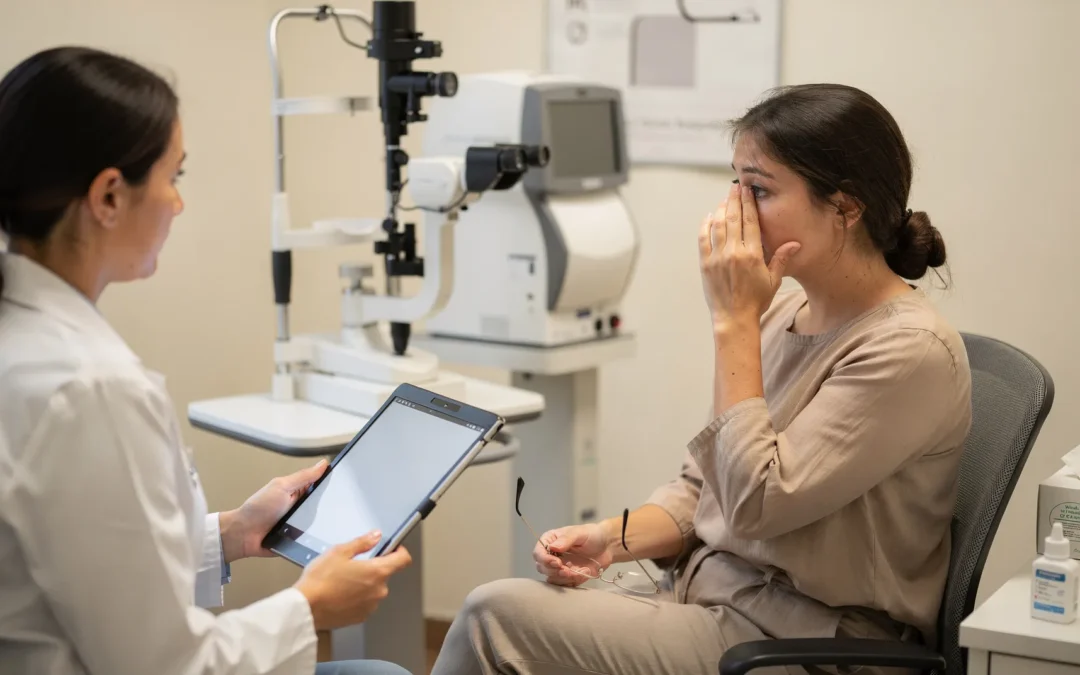
Recognize the pollen-allergy pattern
Pollen-related eye allergies can cause itchy, red, watery eyes and a gritty sensation. For people with pollen allergies, pollen can trigger allergic conjunctivitis, also known as hay fever. Simple allergic conjunctivitis typically affects both eyes and commonly causes clear, watery discharge; pain and decreased visual acuity are uncommon. Sneezing, nasal discharge, and other allergy symptoms may appear at the same time. Pollen is a fine powder released by flowering plants, trees, grass, and weeds, carried through the air, and deposited on surfaces, including the eyes. In people with pollen allergies, contact with this environmental allergen can trigger an immune response in the conjunctiva. The immune response releases inflammatory mediators that produce itching, redness, tearing, and eyelid swelling. Pollen levels and types vary by season and geographic region, so the timing and intensity of symptoms can differ across exposures.
Allergic conjunctivitis affects up to 30% of the general population and 70% of people with allergic rhinitis. Those figures describe eye allergy among two different groups, so they are not interchangeable.
Nasal allergies cost between $3 billion and $4 billion each year. The figure is not a typical out-of-pocket price for evaluating or treating pollen-related eye symptoms.
The practical starting point is to recognize the pattern without treating it as a diagnosis: symptoms that affect both eyes, itch, water, and appear alongside seasonal nasal symptoms can fit an allergy pattern. Because eye-allergy symptoms overlap with other eye problems, symptoms alone do not establish the cause.
Check whether another cause may fit better
Allergic conjunctivitis often produces itchy, watery eyes in both eyes, while viral or bacterial conjunctivitis typically involves only one eye. Simple allergic conjunctivitis also usually causes clear, watery discharge, and pain or reduced vision are uncommon. These features can make an allergy pattern more plausible, but they do not establish the cause.
Red, itchy eyes can also result from dry eye, contact lenses, contact-lens solution, irritants, new cosmetic products, or pink eye. Burning, tearing, or a gritty sensation can be signs of dry eye disease, and eye discharge can be a sign of pink eye. Similar symptoms can occur with eye problems that may affect vision.
Before you settle on pollen as the explanation, ask yourself:
- Are both eyes affected, or is one eye clearly worse?
- Did the symptoms begin after outdoor exposure, a new cosmetic, a new contact-lens solution, or another irritant?
- Do you also have sneezing or a runny nose?
- Is there pain, a change in vision, or discharge rather than clear tearing?
A sudden change, significant pain, or vision change does not fit a routine mild allergy flare. Choose qualified eye care instead of continuing to test home remedies.
Symptoms alone do not establish whether pollen, dry eye, contact lenses, an irritant, cosmetics, pink eye, or another eye problem is responsible. If the cause remains uncertain, arrange an eye-care evaluation rather than repeatedly changing products.

Reduce pollen exposure before symptoms build
Reducing contact with a known allergen is a sensible first prevention step. During high-pollen periods, the following sequence can reduce the amount of pollen reaching your eyes:
- Keep windows closed at home and in the car.
- Use clean air conditioning in both places.
- Stay indoors as much as possible when pollen counts peak or wind is blowing pollen around.
- Wear glasses or sunglasses outdoors.
- Wash pollen from your hands, face, and eyelids after time outside.
Closed windows and air conditioning can reduce pollen exposure in your home and car. Keep the air-conditioning units clean. A window fan can draw outdoor pollen indoors, so avoid using one when pollen exposure is contributing to your symptoms.
Outdoor protection matters in Plano, Frisco, Las Colinas, and surrounding North Texas communities, where your exposure can change between your home, car, work, and outdoor activities. Sunglasses create a barrier that can reduce the pollen reaching your eyes. If you are gardening or doing another activity that stirs up plant material, use the protective eyewear appropriate for that activity.
After being outside, wash your hands before touching your eyes and wash your face and eyelids to remove settled pollen.

Soothe irritation without rubbing
Eye rubbing can worsen irritation and may increase the risk of infection, so replace rubbing with a short soothing routine:
- Place a cold compress over closed eyes to reduce itching.
- Use saline rinses or artificial tears to remove or dilute pollen.
- Wash your hands before touching the area around your eyes.
- Pause and reassess if the symptoms become painful or your vision changes.
Saline rinses and artificial tears can provide relief by flushing or diluting pollen on the eye surface. Over-the-counter lubricating drops can temporarily relieve dryness and help flush allergens from the eyes. Choose preservative-free drops and follow the package instructions.
A cold, clean compress can be useful when itching or swelling is the main problem. Use a clean washcloth, keep your eyes closed, and stop if the compress causes discomfort. This measure is intended to soothe irritation; it does not determine why your eyes are red or watery.
Artificial tears are generally considered safe, but chronic use can worsen dry eye in some cases. If you find that you need lubricating drops repeatedly or your symptoms return as soon as you stop, arrange an eye-care evaluation instead of assuming that more frequent use is the answer.
Adjust contact-lens habits during a flare
Contact lenses can trap allergens against your eyes and make allergy symptoms feel more intense than they do with glasses. A lens can keep an irritant close to the eye when tears would otherwise help wash it away, so glasses are the more practical temporary option during an active flare.
If your eyes are actively red or inflamed, do not wear contact lenses until the redness resolves. During a severe flare-up with very red, swollen eyes or excessive mucus, switch temporarily to glasses so your eyes can heal. Do not put lenses back in simply because the itching has briefly eased; wait until the redness has resolved.
If symptoms began after changing lenses or contact-lens solution, include that detail in your care history. Contact lenses or their solution may cause symptoms, and your eye-care professional can consider that possibility alongside pollen allergy, dry eye, irritation, or infection.

Use nonprescription options with a clear purpose
Nonprescription products can address different symptoms, so start by identifying the symptom you are trying to address:
- Lubricating eye drops can temporarily relieve dryness and help flush allergens from the eyes.
- Saline rinses can remove or dilute pollen.
- Allergy eye drops target eye symptoms.
- For mild symptoms, oral antihistamines may help prevent irritation of the eyes and nose, but discuss what is appropriate with a physician.
Read the current product label and follow its directions rather than combining products or increasing use on your own. For lubricating drops, choose preservative-free products and follow the package instructions. Antihistamine eye drops should not be used beyond the dosage recommended on the package. Antihistamine eye drops can block the release of itch-causing chemicals and may reduce symptoms, but they can sometimes wear off quickly. Short-lived relief is a reason to follow the label and seek professional guidance rather than increase use independently.
Allergy eye drops target eye symptoms. If you also have sneezing or a runny nose, discuss options for broader allergy symptoms with a healthcare professional. An eye drop chosen for itchy eyes does not automatically address every symptom of seasonal allergy.
If over-the-counter products do not help within a few days, contact a healthcare professional, who may recommend prescription allergy eye drops. Arrange an eye-doctor evaluation if home treatment does not relieve symptoms within a few days or if symptoms keep returning.
Know the limits of over-the-counter drops
Frequent need for over-the-counter antihistamine drops is a reason to talk to a doctor. Follow the dosage recommended on the package, and do not respond to incomplete relief by repeatedly increasing how often you use the drops. If symptoms continue despite label-directed use, the next decision is evaluation rather than self-directed escalation.
Decongestant eye drops can reduce the appearance of redness by shrinking blood vessels in the eyes, but they are not recommended for long-term use because some ingredients can lead to persistent redness when stopped. Redness reduction is not the same as identifying or treating the cause of your symptoms.
Not all over-the-counter allergy eye drops are appropriate for everyone. Check with a doctor before using them if you have glaucoma or regularly wear contact lenses. That precaution matters even when the symptoms seem similar to a previous allergy episode.
For more severe allergic conjunctivitis, physicians may prescribe topical antihistamines, vasoconstrictors, mast-cell stabilizers, topical nonsteroidal anti-inflammatory medications, or topical corticosteroids. Topical corticosteroids for allergic conjunctivitis are usually prescribed by ophthalmologists. Do not start, stop, or change prescription treatment without the clinician directing that decision.
Choose prompt or urgent eye care when warning signs appear
Arrange prompt eye-care evaluation when symptoms persist, recur, remain uncertain, or do not respond to nonprescription care within a few days. If red, itchy eye symptoms do not improve within 2 or 3 days with home care, seek care from an eye doctor. A separate recommendation uses the same 2- to 3-day period after allergy eye-drop use without improvement as a reason to contact a doctor for evaluation and treatment recommendations.
Pain or decreased vision is uncommon with simple allergic conjunctivitis, so either symptom should prompt consideration of another diagnosis. Some causes of red eye are sight-threatening and require emergent ophthalmology referral.
Do not keep rubbing the eye or continue cycling through over-the-counter drops while waiting for a warning sign to pass. Move from self-care to qualified evaluation when the symptoms do not fit a mild, familiar pattern. If vision is changing or pain is present, treat that change as more important than the possibility that pollen started the episode.
Use this care-seeking pathway:
- Mild, familiar itching and watering without pain or vision change: reduce pollen exposure and use cautious, label-directed comfort measures.
- Symptoms that persist, recur, or fail to improve within a few days: arrange an eye-doctor evaluation.
Prepare for an evaluation that can sort out the cause
A seasonal allergic conjunctivitis evaluation usually uses a thorough examination and careful history. Your history can help by describing when the current episode began, whether both eyes are affected, what outdoor or indoor exposures preceded it, and whether sneezing or nasal discharge occurred at the same time.
An evaluation may include your allergy history, history of atopy, previous similar episodes, and symptoms during the current episode. Bring a concise account of:
- Previous episodes and how they resolved
- Any contact-lens or contact-lens-solution changes
- New cosmetics or products used near your eyes
- Over-the-counter drops or oral allergy products you used, including how closely you followed the label
- Pain, discharge, injury, or any change in vision
A personal or family history of allergic disease and seasonal allergen exposure are risk factors, but they do not by themselves establish that current eye symptoms are allergic.
Recurrent episodes are common, particularly among people with known allergen exposure or a history of atopy. Recurrence is still a reason to clarify the cause when symptoms are disruptive, different from prior episodes, or not responding as expected. An allergist’s skin testing may help identify triggering allergens when that question remains relevant.
The purpose of evaluation is to distinguish seasonal allergic conjunctivitis from other conditions that can look similar and to decide what type of care fits the findings. Symptoms can suggest a pattern, but examination and history determine whether that pattern is sufficient for the next decision.

Take the appropriate North Texas next step
For suspected pollen-related eye symptoms, begin with exposure reduction, careful comfort measures, and a break from contact lenses when your eyes are red or inflamed. Persistent, recurrent, uncertain, painful, or vision-changing symptoms call for qualified eye-care evaluation rather than repeated self-treatment.
At Brooks Eye Associates, we provide qualified eye-care evaluations for patients in Plano, Las Colinas, and surrounding North Texas communities. A qualified eye-care professional must decide what evaluation or treatment is appropriate for your individual symptoms.
When should pollen-related eye symptoms be evaluated?
How common are pollen-related eye allergies, and who is most affected?
Allergic conjunctivitis affects up to 30% of the general population and up to 70% of people with allergic rhinitis. In the United States, approximately 81 million people were diagnosed with seasonal allergic rhinitis in 2021, including around 26% of adults and 19% of children. These figures are population estimates, not an individual diagnosis; they include both adults and children.
Can I wear contact lenses when my eyes are irritated by pollen?
Contact lenses can trap allergens against the eyes and make symptoms feel more intense. If your eyes are red or inflamed, do not wear contacts until the redness resolves; during a severe flare with marked redness, swelling, or excessive mucus, switch temporarily to glasses. Contact-lens or solution changes should be mentioned during an eye-care evaluation.
What should I know before using over-the-counter eye drops for pollen allergies?
Lubricating drops, saline, and allergy eye drops may ease symptoms, but they do not confirm that pollen is the cause. Follow the current package directions, avoid long-term use of decongestant drops, and ask a doctor before using allergy drops if you have glaucoma or regularly wear contacts. If symptoms do not improve within 2 or 3 days, or if you need drops very frequently, arrange an evaluation rather than increasing use on your own.
How much does pollen allergy eye treatment cost?
Costs vary with the product, insurance coverage, clinician involvement, and local pricing. The reported annual cost of $3 billion to $4 billion concerns nasal allergies and is not a typical out-of-pocket price for evaluating or treating pollen-related eye symptoms.
When should itchy, red eyes be checked by an eye doctor?
Arrange an evaluation when symptoms persist, recur, remain uncertain, or do not improve within a few days of home care or label-directed nonprescription treatment. Seek prompt or urgent qualified eye care for severe or sudden symptoms, pain, decreased or changed vision, an injury, or a possible foreign body, because these findings are not typical of simple allergic conjunctivitis.